
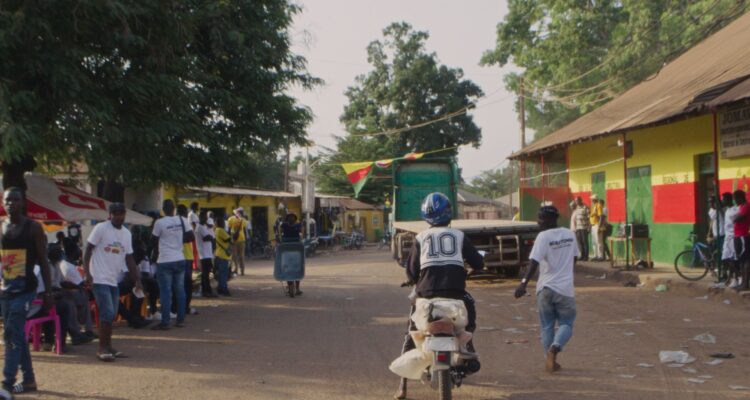
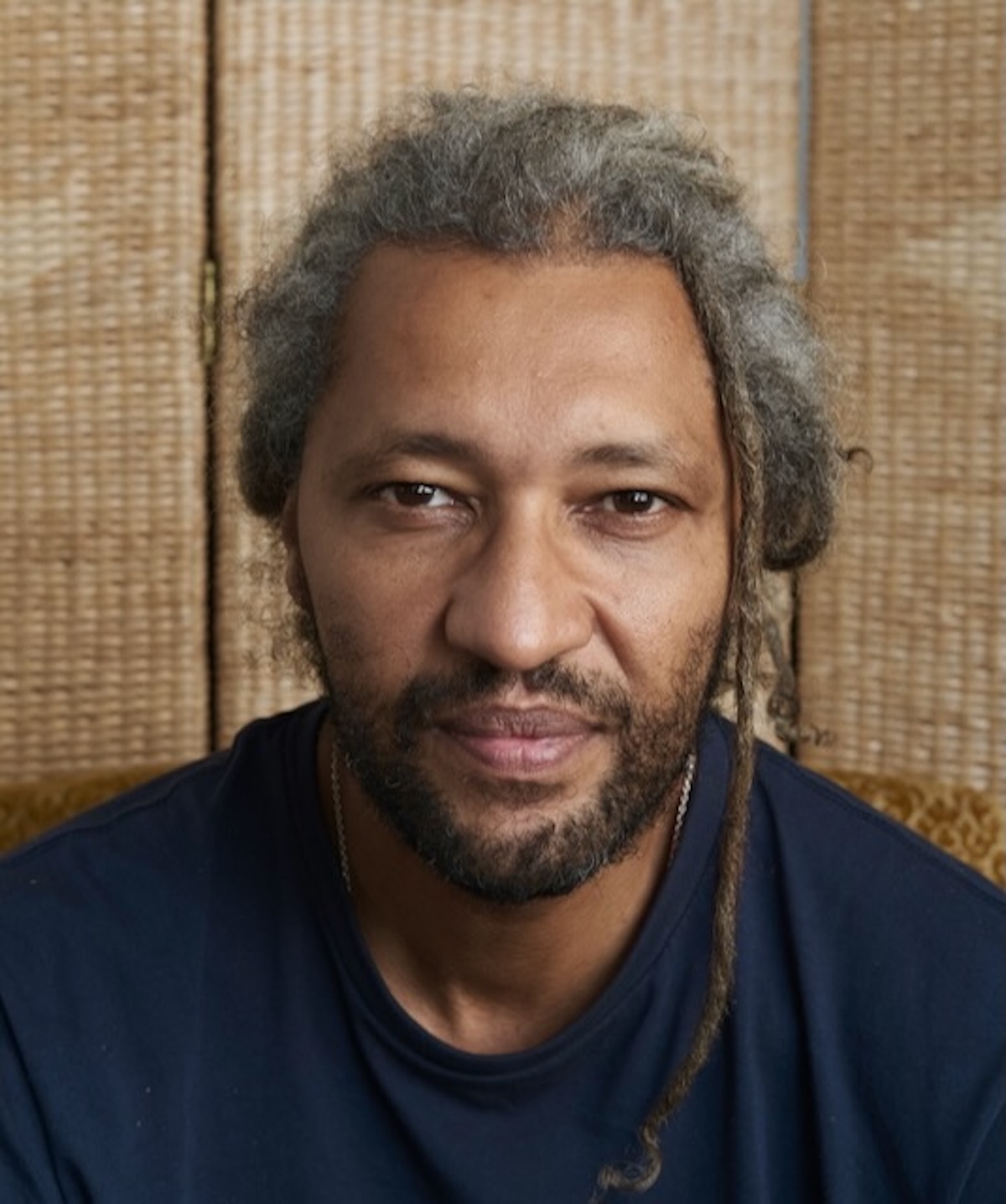
Wir treffen den französisch-senegalesischen Regisseur Alain Gomis zu einem Gespräch über die persönliche Entstehung seines Berlinale-Films Dao (Kinostart: 4. Juni 2026), welcher aus der Erfahrung der Beerdigung seines Vaters hervorging. Dabei thematisiert er den offenen, dokumentarisch geprägten Entstehungsprozess des Films, die Arbeit mit Laien und Familienmitgliedern sowie sein Verständnis von Kino als gemeinschaftliche, emotionale Erfahrung jenseits klassischer Erzählstrukturen.
Du hast gesagt, dass die Idee zu Dao nach der Beerdigung deines Vaters entstanden ist. In welchem Moment danach hast du realisiert, dass du daraus einen ganzen Film machen möchtest oder diese Erfahrung als Grundlage nehmen willst?
Lass mich nicht lügen, ich weiß es nicht wirklich. Vielleicht sogar schon während der Zeremonie selbst. Ich hatte eine Kamera dabei, aber ich habe nur sehr wenige Bilder gemacht, nur sehr wenig gefilmt, weil ich emotional sehr in den Prozess involviert war und es einfach erleben wollte, ohne daraus direkt eine Dokumentation zu machen. Aber es war so tiefgreifend, dass ich mir unmittelbar danach gesagt habe, dass ich einen Film darüber machen möchte. Ich wusste damals nur noch nicht wie, weil das natürlich aus so einer Situation heraus nicht einfach ist.
Der Entwicklungsprozess hat danach ja ziemlich lange gedauert. Warum war das so, und hat sich dein Ansatz währenddessen verändert?
Als ich verstanden habe, dass ich zwei Momente im Film miteinander verbinden wollte, eine Zeremonie in Frankreich und eine Zeremonie in Guinea-Bissau, habe ich zuerst ein vorläufiges Drehbuch geschrieben. Und das ging relativ leicht. Das hat gar nicht so viel Zeit gebraucht. Danach konnten wir etwas Geld auftreiben und ich habe angefangen zu drehen, an die verschiedenen Orte zu reisen und mit dem Casting zu beginnen. Und das war wiederum ein neuer Prozess des Schreibens. Ich habe viele Gespräche und Interviews geführt und angefangen mit den Menschen zu sprechen.
Denn mir wurde klar, dass ich sie eigentlich hören wollte. Ich wollte ihnen nicht meine Worte in den Mund legen, sondern hören, was sie selbst zu sagen haben. Und ab diesem Punkt begann ein ganz neuer Prozess.
Wir werden gleich noch etwas tiefer auf den Film eingehen, aber du hast eben schon das Thema Geld angesprochen. Wie schwierig ist es, Finanzierung und Unterstützung für einen Film zu bekommen, der so ambitioniert und anders ist als ein konventionelles Drama oder eine Dokumentation?
Wir hatten nicht viel Geld, aber es war nicht allzu schwierig, welches zu finden. Ich glaube inzwischen verstanden zu haben, dass ein Drehbuch wie ein Film selbst funktionieren muss: Es muss dich auf eine Reise mitnehmen. Für mich sind ein Film und ein Drehbuch im Grunde dasselbe. Es ist wie eine Bootsfahrt. Wenn man sich dessen bewusst ist, muss man von Seite zu Seite etwas erschaffen, eine Bewegung, die den Leser oder Zuschauer dazu bringt, im Film zu bleiben, auf dieser Reise zu bleiben. Darum geht es eigentlich. Wenn du die Menschen am Ende bis ans Ziel dieser Reise bringen kannst, dann hast du auch eine Chance, Finanzierung zu bekommen. Selbst wenn der Film nicht konventionell ist, versuche ich beim Schreiben immer, ihn einfach, zugänglich und wie ein Abenteuer zu gestalten.
Der Film beginnt mit diesem Castingprozess, in dem zwei Frauen langsam zu Mutter und Tochter werden. Wie meta war dieser Einstieg gemeint? Sehen wir dort echtes Material aus dem tatsächlichen Castingprozess?
Ja, das ist ein echter Castingprozess. Aber ich wusste das schon von Anfang an, denn selbst im Drehbuch gab es bereits Castingszenen. Fiktive Szenen, nicht die echten, die man später im Film sieht. Aber ich wollte diesen Prozess unbedingt im Film haben. Deshalb musste ich erst Geld finden, um einige dieser Szenen überhaupt schreiben zu können. Und als wir dann angefangen haben, ist natürlich etwas ganz anderes daraus entstanden. Aber ich wusste, dass der Prozess sehr offen sein würde. Und ich hoffte auch, dass es faszinierend sein könnte zu sehen, wie der Film überhaupt entsteht.
Du hast mit professionellen Schauspielern, Laien und sogar Mitgliedern deiner eigenen Familie gearbeitet. Wie hat das die Dynamik am Set beeinflusst? Musstest du deinen Regiestil an jede Person anpassen?
Wir haben versucht, den technischen Aspekt so weit wie möglich zu reduzieren. Es ging darum, die Menschen komfortabel fühlen zu lassen. Wenn Leute keine Schauspieler sind, muss man nicht ständig „Ruhe!“ schreien oder alles übermäßig ernst machen. Es musste sehr natürlich bleiben. Deshalb wussten die Leute oft nicht exakt, was sie sagen würden oder wo sie stehen sollten. Wir mussten die Art des Filmens anpassen und dem folgen, was im jeweiligen Moment am Set passiert ist.
Um eine Zeile aus dem Film zu zitieren: „Familie kann kompliziert sein.“ War die Arbeit mit Verwandten schwieriger oder eher intimer und bereichernder?
In gewisser Weise war es großartig, weil man durch einen Film Fragen stellen kann, jemanden konfrontieren kann. Dinge, die im echten Leben viel schwieriger wären. Man kann sogar die eigene Mutter hinterfragen. Es ist unglaublich und faszinierend, wenn Kamera und Film zu einem Werkzeug für die Menschen werden, die den Film gerade machen. Manchmal ist es nicht einmal deine echte Mutter, aber du hast eine Frage, die du schon sehr lange stellen wolltest. Und es ist verrückt, wie Fiktion dir manchmal helfen kann, in etwas sehr Persönliches, sehr Intimes und sehr Wahres über dich selbst einzutauchen. Und gleichzeitig gibt es eine Art Schutz, weil es eben Fiktion ist. Es soll Fiktion sein. Dadurch kann man wirklich weitergehen. Man ist geschützt, weil man eine Figur ist.
Du hast zuvor gesagt, dass die Dialoge nicht vollständig vorgeschrieben waren und es kein endgültiges Drehbuch gab. Hilf mir zu verstehen, wie der Prozess während des Drehs aussah. Habt ihr gemeinsam mit dem Cast entschieden, was ihr mit einer Szene machen wolltet?
Das war bei jeder Sequenz unterschiedlich. Aber nehmen wir zum Beispiel eine Szene wie dieses Interview zwischen uns beiden. Stell dir vor, wir impsovisieren vorher und probieren verschiedene Dinge aus. So kennst du deine Figur und ich kenne meine Figur. Dann kann man einfach sagen: „Okay, lasst uns dieses Interview machen“, ohne weitere Vorgaben. Und dann passiert das Interview einfach. Währenddessen kann ich Fragen vorschlagen, Antworten einwerfen oder jemand anderen dazuholen und sagen: „Hey, willst du dazukommen?“ Und plötzlich wird aus dem Interview etwas mit drei Personen. Im Grunde bauen wir diese Familie während dieses Castingprozesses gemeinsam auf. Und danach wissen alle, wer sie sind. Dann kann man einfach sagen: „Das ist der Moment der Ankunft im Dorf“, und wir gehen gemeinsam durch diesen Moment.
Dao fühlt sich oft weniger wie ein klassischer narrativer Film an, sondern eher wie Zeit, die man mit Menschen verbringt. Hast du bewusst konventionelle Erzählstrukturen und emotionale Höhepunkte vermieden?
Ja, bei diesem Film schon. Aber ich würde nicht sagen, dass ich mich dagegen gewehrt habe. Ich wollte einfach wirklich dieses Gefühl des Zusammenseins erzeugen. Eine Art Gegenwart, die wir gemeinsam teilen können, während wir den Film schauen. Ich wollte, dass die Zuschauer das Gefühl haben diese Menschen zu kennen. Ich mag es, wenn Leute sagen, dass es sich wie ihre eigene Familie anfühlt, oder sie Familienmitglieder wie ihren Onkel darin wiedererkennen.
Und dafür muss man weder afrikanisch sein noch aus der Diaspora kommen. Für mich bedeutet Kino einfach, gemeinsame Momente zu teilen. Wenn man eine sehr dramatische Geschichte erzählt, geht es oft darum, was als Nächstes passieren wird. Hier ging es eher darum, wie sehr ich mich mit der Welt und anderen Menschen verbunden fühle. Es ist wie ein Blues-Song. Ich mag dieses Gefühl, Teil von etwas zu sein, mich selbst in jemand anderem wiederzuerkennen und das Gefühl zu haben, nicht allein zu sein. Dass wir einfach für ein paar Stunden zusammen sind.
Hattest du trotzdem Angst, dass Zuschauer diese immersive Struktur ablehnen könnten?
Nein, ich bin ein Gläubiger. Es geht nur darum, den richtigen Weg zu finden. Ich weiß, dass ich am Anfang eines Films ein paar Minuten habe, in denen das Publikum offen ist. Nicht lange, aber genug Zeit, um die Zuschauer in den Film hineinzuziehen, in eine Bewegung. Danach muss ich Variationen innerhalb dieser Bewegung schaffen und sie durch diese Reise führen. Deshalb bin ich zuversichtlich.
Du meintest, dass es für die Erfahrung keine Rolle spielt, ob man afrikanisch, europäisch oder westlich ist. Hattest du trotzdem die Möglichkeit, den Film vor einem größeren Publikum aus Guinea-Bissau zu zeigen?
Wir hatten eine Vorführung im Senegal. Noch nicht in Guinea-Bissau. Eigentlich sollte das vor einem Monat passieren, aber es hat nicht geklappt. Deshalb wird es später stattfinden. Aber im Senegal war es fantastisch. Die Menschen waren sehr stolz, von einem Kontinent zum anderen reisen zu können, das Leben der Menschen auf der anderen Seite kennenzulernen und Zugang zu einer tiefen Kultur zu bekommen, die im Kino sonst kaum gezeigt wird. Sie waren wirklich sehr glücklich, den Film zu sehen.
Hast du einen Unterschied zwischen westlichem Publikum und dem Publikum dort wahrgenommen?
Ich würde sagen, dass westliche Zuschauer momentan eher emotional reagieren. Und in Afrika, wobei wir dort noch nicht viele Screenings hatten, geht es eher um Stolz und Freude.
Mit meiner westlichen Perspektive fand ich es faszinierend, weil man in eine Kultur eintaucht, über die man wahrscheinlich nicht viel weiß. Der Film zeigt kulturelle Praktiken und soziale Dynamiken, die für westliche Zuschauer ungewohnt wirken, erklärt oder bewertet sie aber nie wirklich. War dir das wichtig?
Ja, denn wenn man einen deutschen Film sieht und darin eine Zeremonie vorkommt, egal welche, dann verspürt der Regisseur nicht den Zwang, sie zu erklären. Er zeigt sie einfach und versucht, sie verständlich zu machen. Und genau dieselbe Freiheit wollte ich auch haben. Letztendlich ist es kein ethnologischer Film. Es geht nicht darum zu verstehen, was diese Zeremonie genau ist. Es geht um Familie, um Herkunft und um all die Dinge, die wir miteinander teilen. Jeder kennt Tod, Hochzeiten, Freude oder Schmerz. Deshalb wollte ich nichts erklären, weil es darum eigentlich nicht geht. Die eigentliche Frage ist eher: Kann diese Erfahrung etwas in deinem eigenen Leben auslösen? Nicht wissenschaftlich, sondern emotional. Kann dieses Gefühl nach dem Film weiterleben und etwas für dein eigenes Leben bedeuten?
Ich hatte das Gefühl, dass der Film Migration nicht nur geografisch, sondern auch emotional darstellt, dieses Dazwischen-Sein zwischen Generationen, Ländern und Identitäten. Kannst du dich persönlich damit identifizieren?
Ja, auf jeden Fall. Ich glaube, wir alle bestehen aus diesem Dazwischen. Wenn man zwischen zwei Kontinenten lebt, wird es vielleicht offensichtlicher, aber wir alle haben eine Mutter und einen Vater. Wir bestehen alle aus zwei verschiedenen Welten. Und wir müssen jeden Tag unsere eigene Definition von uns selbst finden. Wir müssen jeden Tag die Welt erschaffen, in der wir leben wollen. Es ist ein gemeinsamer Kampf: irgendwoher zu kommen und heute seinen eigenen Weg zu finden. Auch beim Thema Leben und Tod muss jeder seinen eigenen Umgang damit finden. Deshalb verbindet uns alle dieses Dazwischen.
Ein großer Teil von Dao handelt von Erinnerung und von Geschichten, die Familien weitergeben, oder eben nicht weitergeben. Glaubst du, dass jüngere Generationen heute stärker daran interessiert sind, verdrängte Familiengeschichten aufzudecken?
Ja, sicher. Ob mehr als frühere Generationen? Das weiß ich nicht. Ich glaube, jede Generation durchläuft denselben Prozess. Wenn man einen oder beide Elternteile verliert und die eigenen Kinder plötzlich dieselben Fragen stellen, die man früher selbst seinen Eltern gestellt hat, merkt man irgendwann dass man nicht alles weiß.
Es geht also darum, die Vergangenheit immer wieder neu aufzubauen. Die Erzählung der Vergangenheit immer wieder zu erneuern. Vergangenheit, Gegenwart und Zukunft miteinander zu verbinden. Und wenn man älter wird, bekommt man manchmal Angst vor all den Fragen, die man nie gestellt hat und auf die man nun keine Antworten mehr bekommen wird. In jeder Familie gibt es Geheimnisse. Verborgene Momente. Schwierige, schmerzhafte Erfahrungen, die man mit sich trägt, selbst wenn man gar nicht genau weiß, was passiert ist. Diese Emotionen wachsen weiter und werden weitergetragen, ohne dass man überhaupt weiß, woher sie kommen. Und meistens fühlt man sich besser, sobald man es endlich versteht, weil die Verbindung dann plötzlich da ist. Deshalb sehe ich das auch bei meinen eigenen Kindern. Ich glaube, das ist etwas ganz Natürliches.
We meet French-Senegalese director Alain Gomis for a conversation about the deeply personal origins of his Berlinale film Dao (in cinemas June 4, 2026), which emerged from the experience of his father’s funeral. He discusses the film’s open, documentary-influenced creative process, working with non-professional actors and family members, and his understanding of cinema as a shared emotional experience beyond conventional narrative structures.
You have stated that the idea for Dao was born after your father’s funeral. At what moment afterwards did you realize you wanted to create this whole film around it, or based on this experience?
I’m not gonna lie, I don’t really know. Maybe it was even during the ceremony itself. I had a camera, but I made very few images, filmed very few things, because I was very involved in the process and I just wanted to leave it, you know, and not make a documentary about it. But it was so deep that I said to myself immediately after that I’d like to make a film about it. But I didn’t know at the time how, because it’s not easy to make a film. I didn’t know exactly how.
Also, the process of developing it took quite some time. Why was that, and did your approach change while developing it and creating these ideas?
So first of all, when I understood that I had two moments in the film that were gonna mix, a ceremony in France and a ceremony in Guinea-Bissau, I tried to make a first script. And it was relatively easy. It didn’t take me a lot of time. Then from that, we managed to find some money, and I started to film, to go to the different places, start the casting. And this was another process of writing the film. I made a lot of conversations, interviews, and started to talk with the people. Because I realized also that what I really wanted was to hear them, not to make them talk with my words, but to hear what they had to say. So a new process started at this point.
We will get into the movie a little bit deeper in a short time, but you already touched on being able to find some money. How hard is it to get funding and support for a movie that’s this ambitious and different compared to a more convetnional drama or documentary?
We didn’t have a lot of money, but it wasn’t too difficult to find. I think I understand now that the script has to be a way, like a film, to put you into a kind of journey. Like I said, you have to travel. To me, a film and a script are the same. It’s just like you being on a boat and you’re doing a trip. So if you’re conscious about that, from one page to another, you have to bring something, a movement that will help the one who reads or the one who watches to stay in the film, to stay in this trip. So it’s more about that. If at the end you can bring people to go to the end of the trip, then you’ve got a chance to find money. So that’s it. Even if the film is not conventional, the effort I have for the script is to make it simple, accessible, and a kind of adventure.
It now starts with this casting process in which two women gradually become mother and daughter. How meta did you go with that opening? Are we actually watching footage from the real casting process?
Yeah, it’s a real casting process. But I knew since the beginning, because even in the script there were already some casting scenes. Fake ones, not the real ones you see in the film. But I wanted to have this process in the film. So I had to find money to write some of the scenes. And then when we started, for sure something very different happened. I knew the process would be very open. And I hoped also that it would be very fascinating to see how the film is built too.
You worked with professional actors, non-professional performers, and even members of your own family, if I recall correctly. How did that affect the dynamic on set? Are you adapting your directing style toward every different person?
So we tried to reduce the part of what I can call technique in some ways. To make people comfortable, that’s the thing. And to make people comfortable when they are not actors, you don’t have to scream “silence,” you don’t have to make it too serious. It has to be very natural. So we would not make everybody know exactly what they were gonna say or where they were gonna stand. We had to adapt filming, to follow what’s going on on the set at that moment.
To quote a line from the film: “Family can be complicated.” Was working with relatives more difficult, or in some ways more intimate or rewarding?
In a way it was great, because through the film you can ask questions, you can confront somebody, you can do whatever would be more difficult in real life. You can question your own mother. It’s incredible and fantastic when the camera and the film can be used as a tool by the people making the film at this moment. Sometimes it’s not even your real mother, but you have a question that you wanted to ask for a long time. And that’s crazy, how sometimes fiction can help you dive into something very personal, very intimate, and very true about yourself.
And you also have a kind of protection, because that’s fiction. That’s supposed to be fiction. So you can really go into it. You are protected in some way. You are a character, so you can go further.
You previously said that dialogue wasn’t fully written beforehand and that there was no definite script. Help me understand the process while shooting. Was it you and the cast collectively deciding what you wanted to do with a scene?
Well, it’s very different on every sequence. But for example, if you do a sequence like you and me doing an interview, the thing is that because we have done improvisations and different things before, you know your character, and I know my character. So it’s easy to start by saying: “Okay, let’s do this interview,” without any other words than this one. And then the interview happens. During the interview, I can sometimes propose some questions, some answers, I can take somebody else and say, “Hey, can’t you join us?” And then the interview becomes something with three people.
So really, the thing is that we are building this family in this process of casting. And after that, everybody knows who they are. Then it’s easy to say: “This is the moment of the arrival to the village,” and we just go through this moment.
Dao often feels less like a narrative film and more like spending time with people. Were you consciously resisting conventional storytelling structures and emotional payoffs?
Yeah, on this one, yes. I was not resisting, I just really wanted to have this feeling of being together. The kind of present that we can share while watching the film. And I wanted everybody to have this feeling of “I know these people.” I like when people say: “I had the feeling that it was my own family.” Or when they say: “I recognized my uncle, my aunt, my whatever.” And you don’t have to be African, you don’t have to be from the diaspora for that.
Cinema for me is just trying to share moments together. Sometimes when you have a very dramatical story, it’s more about what is going to happen. Here it’s more about how much I feel myself connected to the world, to other people. It’s like hearing a blues song. I like the feeling of being part of something, to recognize myself in somebody else, and to have the feeling that I’m not alone. That we are together just for some hours.
Did you still have a fear beforehand that audiences would resist this immersive structure?
No, I’m a believer. So it’s just about trying to find the way. I know that at the beginning of the film I have some minutes where the audience is open. It’s not a long time, but I know I have some minutes where I can try to get the spectator into the film, into a movement. Then I know I have to make some variations inside this movement, trying to make them travel through this journey. So I’m confident.
You said it doesn’t matter for the experience whether you are African, European, or Western. But did you get a chance to screen the film in front of a wider audience from Guinea-Bissau?
We did a screening In Senegal. Not in Guinea-Bissau yet. We were supposed to do it one month ago, but it couldn’t happen. So it’s going to be later. But in Senegal it was fantastic. People were so proud to be able to go from one continent to the other, to discover the life of people on the other side, and also to have access to a deep culture that is not really shown in cinema.
They were very, very happy to see it.
Did you notice a different reception between Western audiences and audiences there?
I would say that the Western audience, for the moment, reacts more emotionally. And in Africa, though we haven’t made a lot of screenings yet, it’s more about pride and happiness.
For me, with my Western perspective, it was fascinating because you get immersed into a culture you probably don’t know much about. The movie shows cultural practices and social dynamics that feel unfamiliar to Western audiences, but it never deeply explains or judges them. Was that important for you?
Yeah, because if you see a German movie, for example, and there’s a ceremony, whatever the ceremony is, the director will not feel the obligation to explain it. He will just do it and try to make it understandable for everybody. So I wanted exactly the same freedom. At the end of the day, it’s not an ethnological film. It’s not about trying to understand what this ceremony is. It’s more about family, heritage, and all the things that we are sharing. Everybody knows about death, about weddings, about joy, about being hurt. So yes, I didn’t want to explain anything, because it’s not about that.
It’s more: can this experience bring something into your own life? Not in a scientific way, but emotionally. Can this emotion continue after the film and mean something in your own life?
I thought the film portrays immigration not only geographically, but emotionally, this sense of in-betweenness between generations, countries, and identities. Do you personally relate to that?
Yeah, for sure. I think we are all made of this. Sometimes when you are between two continents it’s more obvious, but we all have a mother and a father. We are all made of two different worlds in some ways. And we have to find our own definition of ourselves every day. We have to create the world we would like to live in every day.
It’s a common fight: coming from somewhere and trying to find your way today. Talking about life and death everybody has to find their own way into that. So we are all related by this in-between state.
A big part of Dao is about memory and the stories families choose to pass on, or not pass on. Do you think younger generations today are becoming more interested in uncovering parts of family history that were previously left unspoken?
Yeah, sure. More than previous generations? I’m not sure. I think every generation makes the same path. If you lose one of your parents, or both, and then your children start asking you the same questions you used to ask your own parents, suddenly you realize: “Okay, I don’t know everything.” So it’s about rebuilding the past each time. Renewing the telling of the past. Trying to connect the past, the present, and the future. And sometimes when you get older, you become afraid of all the questions you never asked, and now you don’t have the answers anymore. In every family there are mysteries. Hidden moments. Sometimes difficult, harsh moments that you carry even if you don’t know exactly what happened. The emotions continue to grow and go through generations, and you don’t even know where they’re coming from. Most of the time, when you finally understand, you feel better because the link is there now. So yeah, I see it even with my own children. I think it’s natural.
(Anzeige)