
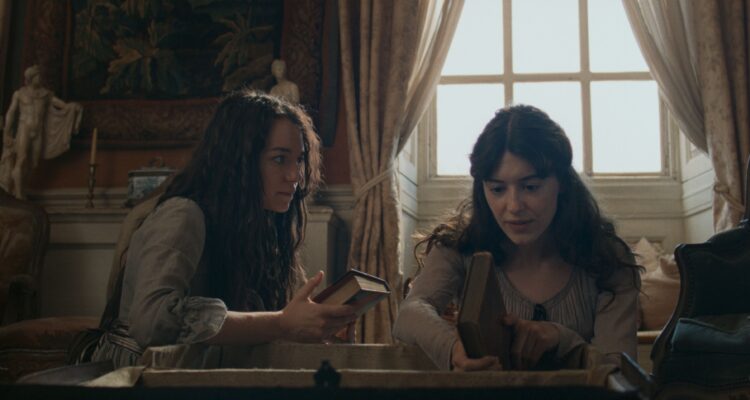
31 Jahre nach der letzten Kinoadaption von Jane Austens Literaturklassiker sprechen wir zum Kinostart von Sinn und Sinnlichkeit am 15. Oktober 2026 mit Daisy Edgar-Jones und Esmé Creed-Miles, die als die Schwestern Elinor und Marianne Dashwood den emotionalen Kern der Neuverfilmung bilden. Beim Special Screening in Berlin erzählen sie von ihrer Sicht auf Liebe, den sozioökonomischen Zwängen für Frauen zu Austens Zeit und der Stimmung am Set.
Wie zufrieden bist du mit dem Film? Es gab bereits viele Adaptionen dieses Buches und die Leute werden ihn zwangsläufig mit der Version aus den 1990er-Jahren vergleichen. Verspürst du aufgrund dieser Vergleiche einen gewissen Druck oder kannst du dich von solchen Gedanken freimachen?
Daisy Edgar-Jones: Ich bin unglaublich stolz auf den Film. Als Austen-Liebhaberin kann ich gewissermaßen gar nicht genug von Austen-Adaptionen bekommen. Ich habe das Gefühl, dass sich die Filme gegenseitig ergänzen. In diesen großartigen Figuren lässt sich immer wieder so viel entdecken. Ich glaube, es zeugt von Austens schriftstellerischer Qualität, dass wir ihre Werke immer wieder neu erkunden können. Jede neue Generation, die sich Austen annimmt, bringt zwangsläufig den Kontext der jeweiligen Entstehungszeit und die Perspektiven der beteiligten Menschen mit ein, darunter auch das, was sie den einzelnen Figuren verleihen. Ich finde, Georgia hat außergewöhnliche Arbeit geleistet. Der Film wird dem Buch wirklich gerecht, fühlt sich in seiner filmischen Umsetzung aber zugleich sehr frisch an. Ja, ich bin sehr stolz darauf.
Du hast bereits davon erzählt, dass du mit den Büchern von Jane Austen aufgewachsen bist. Gibt es noch eine andere Austen-Figur, die du gerne spielen würdest, oder ist Elinor diejenige, mit der du dich persönlich am stärksten identifizierst?
Daisy: Oh Gott, das ist eine großartige Frage. Elinor ist auf jeden Fall die Figur, die mich am meisten begeistert, aber zugleich auch am meisten verängstigt hat. Ich glaube, sie ist sehr schwer auf der Leinwand zu spielen, weil sich bei ihr so vieles zwischen den Zeilen abspielt. Traditionell gilt sie als diejenige, die für den „Sinn“ steht. Aber ich erinnere mich an eine Zeile aus dem Buch, die zu meinem Leitstern wurde: Ihre Gefühle sind stark, aber sie weiß, wie sie diese beherrschen kann. Ich wollte nie, dass sie aufgrund ihrer Zurückhaltung passiv oder emotionslos wirkt. Es sollte sich anfühlen, als würde sie ununterbrochen gegen diese innere Leidenschaft ankämpfen, die sie unter Verschluss halten muss. Das kann ich sehr gut verstehen und nachempfinden, weshalb ich mich darauf gefreut habe, das zu spielen. Ich würde sehr gerne in einer anderen Rolle zu Austen zurückkehren. Esmé und ich haben über Fiona Shaw gesprochen, die Mrs Jennings spielt. Sie war, glaube ich, in der Verfilmung von Persuasion aus dem Jahr 1995 zu sehen. Ich dachte mir: Wäre es nicht schön, in 40 Jahren zurückzukehren und Mrs Jennings oder Mrs Dashwood zu spielen, also eine Figur für eine ältere Schauspielerin, der man so viel verleihen kann? Aber um ehrlich zu sein, würde ich mich über jede Austen-Figur freuen.
Das ist ein Historienfilm und einige Entscheidungen eurer Figuren mögen aus heutiger Sicht kaum vorstellbar erscheinen. Gab es Entscheidungen oder Beweggründe, die ihr persönlich nicht verstanden oder geteilt habt und bei denen ihr das Gefühl hattet, vollkommen anders gehandelt zu haben?
Esmé Creed-Miles: Ich glaube, die Figuren sind sehr authentisch im Einklang mit ihrer Zeit geschrieben. Wenn man in Großbritannien aufwächst, beschäftigt man sich in der Schule mit Austen und der Literatur dieser Epoche. Ich habe außerdem viel Literatur aus dieser Zeit gelesen. Deshalb hatte ich ein ganzheitliches Verständnis der gesellschaftlichen Konventionen und Umgangsformen und davon, was diese für Frauen bedeuteten. Die Entscheidungen der Figuren fühlten sich daher authentisch an und ließen sich leicht nachvollziehen und spielen. Dieses konkrete Problem hatte ich also nicht.
Aber gab es aus deiner persönlichen Sicht etwas, das du niemals tun würdest, beispielsweise deine Freiheit aufzugeben?
Esmé: Heute ist die Situation eine andere, weil Frauen Bürgerrechte besitzen. Je nachdem, wo man im Jahr 2026 auf der Welt lebt, trifft man romantische Entscheidungen beinahe in einem parallelen, alternativen Universum. Die Frage lässt sich nur schwer beantworten, weil man unseren heutigen Kontext nicht wirklich mit dem Leben dieser Frauen vergleichen kann. Frauen konnten weder arbeiten noch ihren eigenen Lebensunterhalt verdienen. Sie hatten keinen Anspruch auf ihren Besitz. Wenn ihr Vater stirbt, fällt das Anwesen an ihren Bruder, der ohnehin bereits so viel besitzt. Ihre Zeit war schlicht vollkommen anders. Natürlich gibt es Dynamiken zwischen den Geschlechtern, die sich innerhalb der christlichen Gesellschaft bis heute gehalten haben und noch immer eine Rolle spielen. Aber ich glaube nicht, dass man beides miteinander vergleichen kann. Entscheidend ist, dass der Text sehr authentisch ist und der Film den Geist des Buches bewahrt. Die Entscheidungen, die Austen für ihre Figuren trifft, sind für diese Figuren und im Kontext ihrer Zeit authentisch. Ich denke, darauf kommt es an.
Ist Sinn und Sinnlichkeit ein Film über Liebe oder über finanzielle Sicherheit?
Daisy: Ich habe das Gefühl, dass Sinn und Sinnlichkeit ein Film über sehr viele Dinge ist. Er beschäftigt sich auf jeden Fall mit der Liebe, allerdings mit Liebe in all ihren Formen. Ich glaube, die eigentliche Liebesgeschichte des Films ist die zwischen den Schwestern. Er handelt aber auch vom gesellschaftlichen Druck und insbesondere vom finanziellen Druck dieser Zeit. Wie Esmé so schön gesagt hat, verlieren diese Frauen zu Beginn des Films ihr Vermögen. Es fällt an ihren Bruder und sie müssen fortan für sich selbst sorgen. Ich glaube, es ist ein Film über Widerstandskraft und weibliche Stärke. Er handelt von der Herausforderung, vor der wir als Menschen und insbesondere als Frauen stehen: dem Konflikt zwischen der Version unserer selbst, die wir anderen präsentieren zu müssen glauben, um von ihnen akzeptiert zu werden und der Version, die wir in Wahrheit sind. Darin liegt Austens Genialität. Jeder Mensch, der diesen Film sieht, wird etwas Persönliches daraus mitnehmen können. Georgias filmische Umsetzung ist so meisterhaft gestaltet, dass ich selbst jetzt bei jeder Sichtung noch etwas Neues darin entdecke. Darauf bin ich sehr stolz.
Jane Austen wird manchmal als Mutter der romantischen Komödie bezeichnet. Findest du diese Beschreibung passend? Und würdest du dir mehr Klassiker dieses Genres wie Notting Hill oder Vier Hochzeiten und ein Todesfall wünschen?
Daisy: Ich finde es großartig, dass du zwei Filme von Working Title erwähnt hast! Working Title versteht sich wirklich sehr gut darauf, großartige romantische Komödien zu produzieren. Romantische Komödien gehören seit jeher zu den Filmen, die ich besonders gerne sehe. Wie ich bereits gesagt habe, fühlt sich dieser Film wie der perfekte Wohlfühlfilm für einen verregneten Sonntag an. Romantik ist ein Thema, das mich schon immer interessiert hat. Dasselbe gilt für Filme, die sich damit beschäftigen, was im menschlichen Leben auf dem Spiel steht. Ich liebe gewaltige Fantasywelten und überlebensgroße filmische Welten. Aber ich finde auch die emotionalen Einsätze des menschlichen Herzens faszinierend, weil wir sie alle nachempfinden können. Besonders überrascht hat mich, wie lustig dieser Film ist. Ich finde ihn wirklich ausgesprochen komisch und Austen war ebenfalls sehr witzig. Ihr Humor beruht stark auf Beobachtungen. Er entsteht aus Situationen und nicht aus Pointen oder Witzen. Es ist die Art von Humor, die aus den Irrungen und Wirrungen des menschlichen Daseins hervorgeht. Ich bin also immer für eine romantische Komödie zu haben. Je mehr, desto besser.
Esmé, du hast bereits in einem anderen Interview gesagt, dass du während der Dreharbeiten Method Acting angewandt hast. Wie hat dir das bei der Rolle geholfen? Und fiel es dir dadurch schwerer, die Figur nach einem Drehtag oder nach dem Ende der Dreharbeiten hinter dir zu lassen?
Esmé: Mein Vater ist ein großartiger Schauspieler. Er hat einmal mit mir über Method Acting gesprochen, weil ich mich im Auto ein wenig darüber aufgeregt hatte, wie albern ich es fand und warum so etwas überhaupt jemand machen sollte. Er sagte, dass zumindest aus seiner Sicht ein Missverständnis darüber bestehe, was Method Acting bedeutet. Es gehe nicht zwangsläufig darum, ständig vollständig das Leben seiner Figur zu führen.
Wenn ich sage, dass ich Method Acting angewandt habe, meine ich damit etwas, das ich von meinem Vater gelernt habe. Er hat mir alles beigebracht, was ich über die Schauspielerei weiß und mir bei der Vorbereitung auf all meine Rollen und Vorsprechen geholfen. Wenn eine Figur traurig ist, empfindet man selbst echte Traurigkeit. Man stellt nicht bloß den Anschein von Traurigkeit her oder bewegt sein Gesicht wie eine Marionette, während man innerlich diese Gefühle gar nicht empfindet. Für mich bedeutete das, dass ich versuchte, den ganzen Tag über emotional und in meiner Rolle zu bleiben, selbst wenn ich mich mit modernen Dingen beschäftigte. Wenn man so lange mit einer Rolle lebt und sie einem besonders am Herzen liegt, fühlt sich die Figur irgendwann wie ein weiterer Mensch im eigenen Leben an, beinahe wie jemand, den man kennt. Ich weiß nicht, ob du das ebenfalls erlebst, aber die Figuren fühlen sich irgendwann wie echte Menschen an. Es ist sehr surreal und eine äußerst merkwürdige Erfahrung.
Gegen Ende fühlte sich Marianne definitiv wie ein Mensch an, den ich liebte. Den ganzen Tag in dieser Gedankenwelt zu bleiben, geschah beinahe wie von selbst. Ich bat das Team außerdem auf eine etwas prätentiöse Weise darum, mich Miss Marianne zu nennen, weil sie beinahe schon camp ist. Sie ist irgendwie fabelhaft. In mancher Hinsicht bin ich ihr sehr ähnlich und in anderer überhaupt nicht. Deshalb musste ich meinen Unglauben tagsüber ein wenig ausblenden und einfach so tun, als wäre ich sie. Daisy nannte mich allerdings nicht Miss Marianne. Das wäre seltsam gewesen.
Daisy: Hallo, Miss Marianne.
Esmé: Da wir uns bereits kannten, wäre es seltsam gewesen, wenn Daisy mich so genannt hätte. Beim Team war es eher augenzwinkernd gemeint. Sie sagten dann: „Miss Marianne“, und wir mussten kichern. Es war keine furchtbar ernste Angelegenheit, aber es war lustig. Sie war mein Alter Ego und ich habe eine Weile in ihr gelebt. Ich frage mich, wann sie wieder zum Vorschein kommen wird.
Ich war auch vom Szenenbild und den Kostümen begeistert. Sie waren wunderschön. Wie hat es sich angefühlt, von all dem umgeben zu sein? Es muss euch dabei geholfen haben, in eure Rollen hineinzufinden.
Daisy: Oh mein Gott, es war einfach alles. Mich hat die Magie des Filmemachens schon immer beeindruckt und auch die Disziplin, die erforderlich ist, um so viele unterschiedliche kreative Köpfe hinter einer gemeinsamen Vision zu versammeln. Es hilft sehr, wenn man mit einer Filmemacherin arbeitet, deren Vision vollkommen klar ist und alle wissen, auf welches Ziel sie hinarbeiten. Eine der Eigenschaften des Films, auf die ich besonders stolz bin, ist seine ungeschliffene, frische und ungezwungene Herangehensweise an Austen. Das zeugt von Georgias filmischer Arbeit, hing aber auch mit ihrer Auswahl der leitenden Köpfe der einzelnen Gewerke zusammen. Grace, unsere Kostümbildnerin, wollte nie, dass die Frauen so aussehen, als würden sie Kostüme tragen. Es sollte wirken, als trügen sie Kleidungsstücke aus einer Garderobe, die sie über viele Jahre hinweg zusammengestellt hatten. Ich fühlte mich meiner Garderobe sehr verbunden. Es gab Kleidungsstücke, die wir untereinander tauschten, was sich für die Dynamik zwischen Schwestern sehr authentisch anfühlte. Ich konnte mir vorstellen, wie Elinor und Marianne den Kleiderschrank durchwühlen und Marianne etwas nimmt, das Elinor gehört, woraufhin diese sagt: „Oh, da ist es ja. Da ist meine Jacke.“
Ich hatte ein Kleid in einem besonders altmodischen Stil, das gegen Ende zu einer moderneren Empire-Silhouette umgearbeitet wurde. Solche Details spiegeln wider, dass die Frauen ihr Vermögen verloren haben und deshalb sparsamer mit ihren Gegenständen, Kleidungsstücken und Besitztümern umgehen müssen. Ich finde diese Detailgenauigkeit wunderschön.
Der Film könnte zunächst den Eindruck erwecken, dass es die wichtigsten Ziele im Leben einer Frau seien, einen Ehemann zu finden und zu heiraten. Je länger man jedoch darüber nachdenkt, desto deutlicher wird, dass er die Liebe in einem viel umfassenderen Sinne betrachtet, darunter auch die Sehnsucht nach Verbundenheit in all ihren Formen. Deshalb habe ich eine sehr große Frage: Was ist Liebe?
Daisy: Ich finde diese Beobachtung großartig. Ich glaube, genau deshalb ist der interessanteste Aspekt des Films die Liebesgeschichte zwischen den beiden jungen Frauen, also zwischen Marianne und Elinor. Selbst ihre Entscheidungen spiegeln das wider. Mariannes Handlungsbogen endet nicht mit ihrer Heirat mit Brandon, wie es im Buch und in einigen früheren Adaptionen der Fall ist. Stattdessen endet er mit Mariannes Erfahrung ihrer selbst, ihrem Weltbild und dem, was sie in dieser Zeit gelernt hat. Bei Elinor ist es ähnlich. Ich liebe die Liebesgeschichte zwischen ihr und Edward. Aber für mich handelt das Ende ebenso sehr davon wie von der Befreiung ihrer eigenen Empfindsamkeit. Es ist ein wunderbar kathartisches Annehmen jener Wildheit, von der sie so lange geglaubt hat, sie zähmen zu müssen.
Was Liebe ist, ist allerdings eine sehr große Frage, die ich unmöglich beantworten kann. Mich hat schon immer der Gedanke beschäftigt, dass wir nicht durch die Welt gehen können, ohne auf andere Menschen angewiesen zu sein. Ich erinnere mich an eine Zeile aus Normal People, die mir im Gedächtnis geblieben ist, seit ich 21 war. Ich glaube, Sally schrieb sinngemäß: Verlasst euch aufeinander und erlaubt euch selbst, das zu tun. Letztlich geht es im menschlichen Leben um die Verbindungen und Freundschaften, die wir knüpfen, darum, was wir lernen und um die unvermeidliche Tatsache, dass die Art, wie wir durch das Leben gehen, andere Menschen beeinflusst. Was ist also Liebe? Liebe ist Verbundenheit und Selbstliebe.
Ich glaube, wir neigen dazu, Liebe ausschließlich mit der Suche nach einem Partner gleichzusetzen. Dabei vergessen wir all die anderen Dinge, die Liebe zu Liebe machen.
Daisy: Ja, und das ist Verbundenheit. Es geht auch um Gemeinschaft. Ich finde, Mrs Jennings ist eine viel zu wenig gewürdigte Heldin. Diese jungen Frauen sind mittellos und sie gibt ihnen ein Zuhause, eine Gemeinschaft und Freundschaft. Man kann sie als jemanden abtun, der lediglich andere Menschen miteinander verkuppeln möchte. Aber das entspringt vor allem ihrer Großzügigkeit. Sie sagt damit: „Ich möchte, dass ihr Freude findet. Ich möchte, dass ihr glücklich werdet.“ Dazu gehört auch, einen Partner zu finden, bei dem man sein authentisches Selbst sein kann. Ich liebe es, dass Brandon Mariannes Wesen annimmt. Er versucht nicht, es zu unterdrücken oder auszunutzen. Bei Edward ist es genauso. Was er und Elinor ineinander finden, sind eine gemeinsame Güte und die gemeinsame Sorge um andere Menschen. Sie stellen andere so häufig vor sich selbst und genau darin verlieben sie sich beim jeweils anderen.
Und was bedeutet Liebe für dich, Esmé?
Esmé: Das ist eine schwierige Frage. Ich glaube, dieser Film handelt ebenso sehr von den Verbindungen zwischen Frauen wie von romantischen Beziehungen. Das war Georgia sehr wichtig und wir sind ihrer Vision gefolgt. Vor allem ist es ein Film über Schwestern. Ich habe eine Schwester und bin außerdem von vielen Frauen umgeben aufgewachsen. Ich denke, meine Beziehungen zu den Frauen in meinem Leben sind mir wichtiger als alles andere. Es hat mir große Freude bereitet, das in diesem Film zu erkunden, insbesondere gemeinsam mit Daisy. Ich liebe meine Freundinnen und Freunde und diese Beziehungen sind mir sehr wichtig.
Vielen Dank euch beiden.
Thirty-one years after the last cinematic adaptation of Jane Austen’s literary classic, we speak to Daisy Edgar-Jones and Esmé Creed-Miles ahead of the theatrical release of Sense and Sensibility. Playing sisters Elinor and Marianne Dashwood, they form the emotional heart of the new adaptation. At a special screening in Berlin, they share their perspectives on love, the socioeconomic constraints faced by women in Austen’s time and the atmosphere on set.
How satisfied are you with the film? There have been many adaptations of this book and people will inevitably compare it with the 1990s version. Do you feel any pressure because of those comparisons, or are you able to free yourself from such thoughts?
Daisy Edgar-Jones: I feel extremely proud of the film. As a lover of Austen, I sort of can’t get enough of Austen adaptations. I feel like the films complement one another. There is always so much to be found in these brilliant characters.
I think it is such a testament to Austen’s writing that we can continue to explore her work time and time again. Every new generation that takes on Austen will ultimately bring to it the context of the era in which it is being made and the perspectives of the people involved, including what they bring to each character. I think Georgia has done an exceptional job. The film really honours the book, but it also feels very fresh in its filmmaking. So yes, I am very proud of it.
You have spoken before about growing up reading Jane Austen. Is there another Austen character you would still love to play, or is Elinor the one you personally identify with the most?
Daisy: Oh gosh, that is a great question. Elinor is certainly the character who excited me the most and also scared me the most. I think she is a very difficult character to play on screen because so much of what happens for her is between the lines. She is traditionally considered to represent the “sense” end of the scale, but I remember a line in the book that became my North Star: her feelings are strong, but she knows how to govern them. I never wanted her restraint to make her seem passive or unemotional. I wanted it to feel as though she were constantly battling this inner passion that she had to keep under lock and key. That is something I really understand and relate to, so I was excited to play it.
I would love to return to Austen in another role. Esmé and I were talking about Fiona Shaw, who plays Mrs Jennings. She was in the 1995 version of Persuasion, I think. I thought, wouldn’t it be fun to come back in 40 years and play Mrs Jennings or Mrs Dashwood, a character for an older actress with so much to bring? But I would be happy to play any Austen character, to be honest.
This is a period film and some of your characters’ choices may seem unimaginable from a modern perspective. Were there any decisions or motivations you personally did not understand or agree with and where you felt you would have acted completely differently?
Esmé Creed-Miles: I think the characters are written very authentically in accordance with the period. Growing up in the UK, you study Austen and literature from that era at school. I have also read a lot of literature from that period, so I had a holistic understanding of social convention and etiquette and what those things meant for women. The choices the characters made therefore felt authentic in a way that was easy to follow through and play. I did not have that particular problem, no.
But from a personal perspective, was there anything you felt you would never do, such as giving up your freedom?
Esmé: It is different today because women have civil rights. Depending on where you live in the world in 2026, you are making romantic decisions in what is almost a parallel, alternate universe. It is a difficult question to answer because you cannot really compare our context with that of these women and their lives. Women could not work and make a living. They did not have the rights to their estates. When their father dies, the estate goes to their brother, who already has so much. Their time was simply very different. Of course, there are dynamics between genders that have lingered throughout Christian society and are still at play today, but I do not think you can compare the two. What matters most is that the writing is very authentic and that the film keeps the spirit of the book alive. The choices Austen makes for her characters are authentic to those characters within the context of the time in which they live. I think that is what is important.
Is Sense and Sensibility a film about love or about financial security?
Daisy: I feel like Sense and Sensibility is a film about many things. It definitely explores love, but love in all its forms. I think the true love story of the film is the one between the sisters. It also explores the pressures of society and, in particular, financial pressures at that time. As Esmé said so beautifully, these women lose their fortune at the beginning of the film. It goes to their brother and they really have to fend for themselves.
I think it is a film about resilience and female strength. It is about the challenge we face as human beings, but particularly as women, between the version of ourselves we feel we have to present in order to be palatable to other people and the version of ourselves we authentically are.
That is the genius of Austen: every person who watches this film will be able to take something personal from it. The genius of Georgia’s filmmaking is that it is so masterfully crafted. Even now, every time I see the film, I find there is more I can take from it with each viewing. That is something I am very proud of.
Jane Austen is sometimes seen as the mother of the romantic comedy. Do you think that is an appropriate description? And do you wish we had more classics of the genre like Notting Hill or Four Weddings and a Funeral?
Daisy: I love that you have mentioned two Working Title films! Working Title is very, very good at making brilliant romantic comedies. Rom-coms have always been among the films I love to watch. As I said before, this film feels like such a rainy-Sunday comfort watch. Romance is a theme I have always been interested in, as are films that explore the stakes of human life. I love massive fantasy worlds and larger-than-life settings, but I also think the stakes of the human heart are fascinating because that is something to which we can all relate.
One thing that really struck me is just how funny this film is. I think it is genuinely very funny, and Austen was very funny. Her comedy is highly observational. It is situational rather than built around punchlines and jokes. It is the kind of humour that emerges from the trials and tribulations of human existence. So yes, I am always here for a rom-com. The more, the merrier.
Esmé, you said before that you used method acting during filming. How did that help you with the role? Did it make it harder to leave the character behind after a day on set or after filming had wrapped?
Esmé: My dad is a brilliant actor. He once spoke to me about method acting because I was having a bit of a rant in the car about how silly I thought it was and why anyone would do it. He said that, from his perspective at least, there is a misconception that method acting necessarily means completely living the life of your character all the time.
What I meant when I said I used method acting, and what I learned from my father, who taught me everything I know about acting and helped me prepare for all my roles and auditions, is that when a character is sad, you genuinely feel very sad. You are not just manufacturing the appearance of sadness or moving your face like a puppet while feeling nothing inside. For me, that meant trying to remain emotional and in character throughout the day, even while I was doing modern things. When you live with a role for that long, particularly one you really love and care about, the character begins to feel like another person in your life, almost like someone you know. I don’t know whether you experience that, but they begin to feel like actual people. It is very surreal and a bizarre experience.
Towards the end, Marianne definitely felt like a person I loved. Remaining in that headspace throughout the day almost happened by accident. I also rather pretentiously asked the crew to call me Miss Marianne because she is almost camp. She is kind of fabulous. In some ways, I am very like her and in other ways, I am very different. I therefore had to suspend my disbelief a little during the day and simply pretend to be her. Daisy did not call me Miss Marianne. That would have been weird.
Daisy: Hello, Miss Marianne.
Esmé: Because we already knew each other, it would have been strange if Daisy had called me that. With the crew, it was almost tongue-in-cheek. They would say, “Miss Marianne,” and it would make us giggle. It was not a super-serious thing, but it was funny. She was my alter ego and I lived in her for a little while. I wonder when she will come back out.
I was also amazed by the production design and the costumes. They were wonderful. How did it feel to be surrounded by all of that? It must have helped you get into character.
Daisy: Oh my goodness, it was everything. I have always been struck by the magic of filmmaking and by what a discipline it is to bring so many different creative minds together behind one vision. It really helps when you have a filmmaker whose vision is extremely clear and everyone understands the brief they are working towards. One of the qualities of the film that makes me so proud is its raw, fresh and undone approach to Austen. That is such a testament to Georgia’s filmmaking, but it also came from her choice of department heads. Grace, our costume designer, never wanted the women to look as though they were wearing costumes. She wanted them to look as though they were wearing clothes from a wardrobe they had cultivated over many years.
I felt very connected to my wardrobe. There were clothes that we swapped with one another, which felt very true to the dynamics between sisters. I could imagine Elinor and Marianne rummaging through the wardrobe and Marianne taking something that belonged to Elinor, who would then say, “Oh, there it is. There’s my jacket.”
I had one dress in a particularly old-fashioned style that was recut into a more modern empire line by the end. Details like that reflect the fact that the women have lost their fortune and therefore have to be more economical in the way they interact with their objects, clothes and possessions. I think that level of detail is beautiful.
The film could initially be read as suggesting that finding a husband and getting married are the central goals in a woman’s life. But the more you reflect on it, the more it seems to explore love in a much broader sense, including the longing for connection in all its forms. So I have a very big question: What is love?
Daisy: I love that observation. I think that is why the most interesting facet of the film is the love story between the girls, between Marianne and Elinor. Even the choices they make reflect that. Marianne’s arc does not end with her marriage to Brandon as it does in the book and in some previous adaptations. Instead, it ends with Marianne’s experience of herself, her worldview and what she has learned.
It is the same with Elinor. I love the love story between her and Edward, but I feel the ending is as much about that as it is about her unleashing her sensibility. It is a wonderfully cathartic embrace of a wildness that she has felt compelled to tame for so long.
What love is, however, is a very big question and an impossible one for me to answer. I have always been struck by the fact that we cannot go through the world without depending on other people. I remember a line from Normal People that stayed with me when I was 21. I think Sally wrote something along the lines of: depend on one another and allow yourself to do that. Ultimately, human life is about the connections and friendships we make, what we learn and the inevitable fact that the way we navigate life will affect other people. So what is love? Love is connection and self-love.
I think we tend to imagine love is only about finding a partner, but we forget all the other things that make love what it is.
Daisy: Yes, and that is connection. It is also community. I think Mrs Jennings is such an unsung hero. These girls are destitute and she gives them a home, a community and friendship. You can dismiss her as someone who simply wants to play matchmaker, but it comes from a generosity of spirit more than anything else. She is saying, “I want you to find joy. I want you to find happiness.” Part of that is finding a partner who allows you to be your authentic self. I love that Brandon embraces Marianne’s spirit. He is not trying to suppress it or take advantage of it. It is the same with Edward. What he and Elinor find in one another is a shared kindness and concern for other people. They so often put others before themselves, and that is what they fall in love with in one another.
And what does love mean to you, Esmé?
Esmé: It is a difficult question. I think this is a film about women connecting with one another just as much as it is about women connecting romantically. That was very important to Georgia and we were following her vision. More than anything, it is a film about sisters.
I have a sister and I also grew up surrounded by many women. I suppose my relationships with the women in my life are more important to me than anything else. I really enjoyed exploring that in this film, particularly with Daisy. I love my friends and those relationships are very important to me.
Thank you both so much.
(Anzeige)