
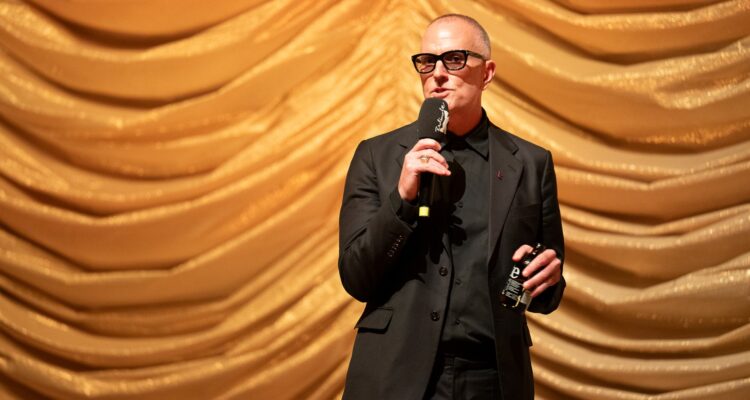
Am Rande der Berlinale haben wir mit Regisseur Padraic McKinley und Schauspielerin Julia Jones über The Weight – Im Goldrausch (Kinostart: 19. November 2026) gesprochen. Im Interview erzählen sie von der gemeinsamen Arbeit, den Herausforderungen der Dreharbeiten in Bayerns Wäldern und der gesellschaftlichen Aktualität ihres Abenteuerfilms.
Wie bist du auf das Projekt aufmerksam geworden und was hat dich letztlich überzeugt, es zu übernehmen?
Padraic McKinley: Ich habe jahrelang viel geschnitten, Fernsehserien produziert und bei Projekten ausgeholfen, bei denen es Probleme zu lösen gab, bevor dieser Film zustande kam. Simon und Nathan Fields gehören zu unseren Produzenten. Simon hat mich schon immer sehr unterstützt. Als ich anfing, fürs Fernsehen Regie zu führen, wollte er ein Projekt finden, das wir gemeinsam als meinen ersten Langfilm umsetzen könnten.
Sie gaben mir ein Drehbuch namens The Weight. Es entwarf eine wirklich spannende Welt und war eine Art umgekehrter Heistfilm mit vielen interessanten Ansätzen. Letztlich war es für mich aber noch nicht ganz stimmig. Wir holten Ethan dazu, den ich von The Good Lord Bird kannte, und entwickelten das Drehbuch und die Geschichte gemeinsam mit Shelby Gaines, unserem Drehbuchautor und Komponisten, neu.
Dabei orientierten wir uns an den Filmen, die uns alle inspiriert hatten: den Abenteuerfilmen der Siebziger und dem Kino dieser neuen goldenen Ära von den späten Sechzigern bis in die frühen Achtziger. Als diese Welt und die Figur Murphy einmal standen, wurde der Film für die nächsten fünf Jahre zu meinem alles bestimmenden Ziel.
Du hast erwähnt, dass es bereits ein Drehbuch gab. Waren die ursprünglichen Autoren über diese Grundlage hinaus auch an der Überarbeitung beteiligt?
Padraic: Ich möchte die Leistung des ursprünglichen Drehbuchs keineswegs schmälern. Es war ein gutes Drehbuch, hatte aber einen anderen Ton. Es war eher ein Actionfilm als ein Abenteuerfilm und enthielt einige größere Wendungen. Als ich gebeten wurde, Ethan ins Boot zu holen, sah ich die Chance, daraus etwas zu machen, das stilistisch und tonal stärker dem entsprach, was uns wirklich begeistern würde. Ethan als Schauspieler, mich als Regisseur und Shelby als Autor. Als wir uns auf die Denkweise dieser Filme eingelassen hatten, waren wir, ganz ohne beabsichtigtes Wortspiel, auf Gold gestoßen.
Julia, wie hast du von dem Projekt erfahren? Gab es einen klassischen Castingprozess?
Julia Jones: Pat und ich hatten einen gemeinsamen Freund, der sich eines Abends bei mir meldete und fragte, ob ich vorbeikommen und Pat kennenlernen wollte. An dem Abend klappte es nicht, aber dieser Freund sagte: „Bei diesem Projekt willst du dabei sein.“ Kurz darauf schickte mir Pat das Drehbuch. Ich las es und war sofort neugierig. Es war anders als alles, was ich bisher gespielt hatte, und eine richtige weibliche Hauptrolle.
Dann hatten wir ein Gespräch über Zoom. Ich hatte Ideen, Gedanken und viele Fragen. Ausschlaggebend war für mich, mit Pat zu sprechen und zu sehen, wie offen und neugierig er war, wie sehr er auf Zusammenarbeit setzte und wie aufrichtig er sich für meine Gedanken und Ideen zu Anna zu interessieren schien. Von da an war der gesamte Prozess im besten Sinne von Zusammenarbeit geprägt. Am stärksten ist mir in Erinnerung geblieben, wie konsequent sich das durch jeden einzelnen Moment zog.
Padraic: Ich glaube nicht, dass das ein normaler Castingprozess war, denn Julia war die Einzige, die überhaupt infrage kam. Es gab keinen Ersatzplan. Entweder Julia oder niemand. Ich weiß nicht, ob das normal ist, aber so war es.
Deine Figur ist keine typische Jungfrau in Nöten, die darauf wartet, von den tapferen Männern um sie herum gerettet zu werden. Wie viel kreativen Freiraum hattest du bei ihrer Gestaltung?
Julia: Das war wirklich eine gemeinsame Arbeit. Shelby hatte eine sehr konkrete Vorstellung davon, wer sie war und welche Vorgeschichte sie hatte. Ich habe mit ihm darüber gesprochen, wie viel Spielraum es dabei gab, was das für sie im Drehbuch bedeutete, wohin sie sich entwickelte und welche Entscheidungen sie auf dieser Grundlage traf. Dazu kam die Flexibilität während der Dreharbeiten. Man konnte mit einer Idee kommen wie: „Was wäre, wenn sie in dieser Szene das hier macht?“ Im Großteil des Films geht es um sieben Figuren. Meistens stehen aber nur eine oder zwei von ihnen gerade im Mittelpunkt. Die meisten anderen sind also ebenfalls im Bild und könnten in diesen Momenten alles Mögliche tun.
Darin lagen viele Möglichkeiten, etwas zu erzählen. Man war oft im Bild, auch wenn man keinen Text hatte oder nicht im Zentrum des Geschehens stand. Pat verstand es sehr gut, diesen Freiraum für alle Figuren zu nutzen und Momente zu finden, die die Geschichte bereicherten und den Figuren mehr Tiefe verliehen. Ich glaube, Anna hat von diesem Zusammenspiel sehr profitiert: von Shelbys ursprünglicher, sehr greifbarer Vorstellung ihrer Herkunft, von der Offenheit, während des Drehs Dinge weiterzuentwickeln, und von Pats visuellem Blick. Er sagte dann: „Konzentrieren wir uns darauf. Machen wir daraus einen eigenen Moment im Film.“ Auch wenn das gar nicht im Drehbuch stand. So ist sie während der Arbeit wirklich gewachsen und hat sich weiterentwickelt. Das hat mir großen Spaß gemacht.
Das ist dein erster Langfilm, auch wenn du als Regisseur natürlich kein Neuling bist. Hast du bei einer derart erfahrenen Besetzung die Last der Verantwortung gespürt?
Padraic: Nein, überhaupt nicht. Die erfahrenen Schauspieler haben mich sehr unterstützt. Als ich anfing, fürs Fernsehen Regie zu führen, hat mir unser gemeinsamer Freund, der eine Hauptrolle in der Serie spielte, viel Selbstvertrauen im Umgang mit Schauspielern gegeben. Er hat mir damals richtig Mut zugesprochen. Darauf besinne ich mich immer wieder: zu wissen, was ich will, und mir bewusst zu machen, dass all die Jahre beim Film zählen, auch wenn ich sie nicht auf dem Regiestuhl verbracht habe. Wenn man mit Ethan und Russell zusammensitzt, die zusammen wahrscheinlich ein paar Hundert Filme gedreht haben, haben sie ohnehin etwas von Mentoren. Beide haben auch schon bei mehreren Filmen Regie geführt. Als der erste Drehtag begann, hatte ich bereits das Gefühl, mit ihnen befreundet zu sein.
Ehrlich gesagt gab es schon einen zusätzlichen Druck, wenn Russell am Set war, weil alle ihr Bestes geben wollten. Wir hatten ihn nicht für viele Drehtage, und die Szenen waren technisch ziemlich komplex. Wir hatten mehrere Leute an einem Ort und mussten auch noch all diese kleineren Szenen drehen. Das war unsere erste Woche, der Einstieg stand also durchaus etwas unter Druck. Aber je enger wir auch als Freunde zusammenwuchsen, desto mehr fühlte es sich an wie die letzte Schulwoche vor dem Abschluss. Man geht hin, um Zeit miteinander zu verbringen. Natürlich gibt es noch etwas zu tun, aber es hat unglaublich viel Spaß gemacht. Jeder Tag war herausfordernd. Am nächsten Tag das gedrehte Material anzuschauen und zu sehen, was wir geschafft hatten, war aber sehr befriedigend. Es fühlte sich eigentlich nicht wie Druck an. Wie es so schön heißt: „Druck ist ein Privileg.“ Und es war ein Privileg.
Julia hat beschrieben, wie sehr der Prozess von Zusammenarbeit geprägt war. Wie würdest du deinen Umgang mit Schauspielern beschreiben? Hattest du eine genaue Vorstellung oder hast du bewusst Spielraum gelassen?
Padraic: Das ist wie bei einem Musikstück. Du hast Noten, die dir Tonart, Tempo und Melodie vorgeben, aber innerhalb dieses Rahmens kannst du improvisieren. So war auch die Struktur unseres Films, mit längeren Einstellungen und solchen Dingen. Wichtig war, die Schauspieler nicht zu zermürben, ihnen Spontaneität zu ermöglichen und ihre Begeisterung über den Tag und die Arbeit an einer Szene hinweg lebendig zu halten.
Wenn ich meine Arbeit richtig mache, habe ich Menschen besetzt, die ich respektiere und die diesen Figuren Leben einhauchen. Ich sehe es nicht als meine Aufgabe, dem im Weg zu stehen. Ich muss nur dafür sorgen, dass wir gemeinsam ungefähr auf dem Kurs bleiben, der uns dorthin führt, wo wir hinwollen.
Julia: Besonders beeindruckt hat mich an Pats Arbeitsweise, dass er ganz genau weiß, was er braucht und will, und es innerhalb dieses Rahmens trotzdem so viel Raum zum Ausprobieren und Spielen gibt. Ich habe noch nie mit jemandem gearbeitet, der so klare Vorstellungen hatte und einem gleichzeitig so viel Freiheit ließ.
Ihr habt in Bayern statt in den USA gedreht. Wie viel davon entstand tatsächlich draußen im Wald? Und wie seid ihr beispielsweise an die Brückensequenz herangegangen?
Padraic: Die Brücke wurde nachgebaut, aber wir waren tatsächlich die ganze Zeit im Wald, an Orten, die teilweise schwer zu erreichen waren. Und von dort aus ging es dann noch tiefer hinein. Wir wollten keine Greenscreens, keine LED-Kulissen oder Ähnliches verwenden. Die Brücke war technisch ziemlich aufwendig, weil wir eine Felswand finden und dort eine Brücke bauen mussten. Es ist nur eine halbe Brücke, deshalb muss man alles in dieselbe Richtung filmen. Man findet keinen Ort mit der richtigen Spannweite, also muss man sie an etwas anbauen.
Julia: Das war technisch sehr aufwendig und hat mir großen Spaß gemacht. Als ich die Brücke zum ersten Mal sah, wirkte sie wie aus Indiana Jones. Das war wirklich gut gemacht. Ansonsten waren wir die ganze Zeit im Wald. Wir haben auch in den Bavaria Studios gedreht. Um unsere Woche dort bestmöglich zu nutzen, haben wir draußen im Dunkeln ein paar Lagerfeuerszenen aufgenommen. Dabei war es nicht so entscheidend, wo genau wir waren, solange wir das Feuer unter Kontrolle halten konnten und eine Straße in der Nähe hatten, um die Ausrüstung heranzuschaffen. So konnten wir etwas zügiger arbeiten. Ansonsten waren wir draußen unterwegs und haben überall in Niederbayern gedreht.
Padraic: Der Ort heißt V-I-E-C-H-T-A-C-H. Die Leute sprechen das unterschiedlich aus. Ich habe es einmal zu jemandem gesagt, und der fing an zu lachen, weil ich etwas Obszönes gesagt hatte.
Wenn du die erste Silbe mit einem F aussprichst, kommt das gefährlich nah an „fick euch“. Daran könnte es liegen.
Julia: Noch etwas zu den Drehorten: Immer wenn wir an einem neuen Ort anfingen, war Pat völlig begeistert. Er sagte: „Wartet nur, bis ihr das seht. Wartet, bis ihr diesen Ort seht.“ Irgendwann fiel mir ein Zusammenhang zwischen seiner Begeisterung und den Schwierigkeiten auf, die uns erwarteten. Je begeisterter er war, desto tiefer lag der Ort im Wald, desto schwerer war er zu erreichen und desto gefährlicher wurde es. Aber es hat sich eindeutig gelohnt.
Kommen wir noch einmal auf die Figur zurück. Deine Geschichte zeigt Murphy als einen grundanständigen Vater, der sich durchkämpfen muss. Ohne zu viel zu verraten, eröffnet ihm seine Haftstrafe eine unerwartete Möglichkeit. Würdest du sagen, dass diese Reise ihm die Chance gibt, Versprechen einzulösen, die er sonst vielleicht nicht hätte halten können?
Padraic: Murphy ist eine interessante Figur, weil er ein Kriegsheld, ein ehrlicher Mensch und ein alleinerziehender Vater ist, der zu einer Zeit ums Auskommen kämpft, in der das nicht leicht war. Ich glaube, der größte Druck für einen Vater besteht darin, seinem Kind ein Dach über dem Kopf und genug zu essen zu geben. Das Paradoxe ist, dass er ins Gefängnis muss und einen unmöglichen Auftrag übernimmt, um seiner Tochter letztlich ein sichereres Zuhause zu bieten und dafür zu sorgen, dass sie genug zu essen und ein gutes Leben hat.
Murphy ist ein ehrlicher Mensch. Wir mussten ein paar Dinge herausschneiden, an denen man besonders gut gesehen hätte, wer er ist und dass er Rückgrat hat. Er ist clever und gutherzig, scheut aber auch keine handfeste Auseinandersetzung, wenn es nötig ist. Besonders dann, wenn es um seine Tochter geht.
Wenn du auf die aktuelle Weltlage schaust: Haben sich die gesellschaftlichen Probleme, die der Film aufgreift, verändert oder sind sie heute noch genauso drängend?
Padraic: Ich glaube, du stellst diese Frage, weil sie noch genauso drängend sind. Sonst würde sie gar nicht aufkommen. Für mich haben diese Themen heute eine enorme Aktualität, gerade mit Blick auf das Land, in dem ich lebe. Es gibt eine Szene, in der über die Vorteile des Sozialismus gesprochen wird und jemand anderes sagt: „Ich wünschte, wir würden euch alle aus diesem Scheißland schmeißen.“ Das ist ein sehr offensichtliches Beispiel. Aber in Amerika werden auch massenhaft Kinder von ihren Eltern getrennt. Menschen haben Schwierigkeiten, sich das Leben zu leisten, wie damals während der Weltwirtschaftskrise.
Im größeren Zusammenhang geht es um diejenigen, die etwas haben, und diejenigen, die nichts haben. Um die Menschen an der Macht und ihr autoritäres Verhalten. Das sieht man bei Clancy und den Wärtern, die die Situation ausnutzen, um noch reicher zu werden. Es gibt viele Parallelen. Ich glaube, das ist ein Grund, weshalb der Film die Menschen anspricht. Sie sehen, dass wir fast hundert Jahre später immer noch über viele derselben Probleme sprechen.
Julia, möchtest du noch etwas ergänzen?
Julia: Es gibt definitiv eine Verbindung zwischen der schieren Verzweiflung unserer Figuren und dem, womit viele Bevölkerungsgruppen weltweit gerade kämpfen. Was tut man und wie versucht man, diese Situation zu überstehen? Ich hoffe, dass die Menschen in unserem Film neben all der Verzweiflung auch sehen, dass diese Figuren es schaffen, indem sie sich aufeinander verlassen, einander das Leben retten und füreinander da sind. Darin liegt ein kleiner Funken Hoffnung. Ich hoffe, dass die Menschen ihn mitnehmen.
Vielen Dank euch beiden für eure Zeit.
During the Berlinale, we spoke with director Padraic McKinley and actress Julia Jones about The Weight. In our interview, they discuss their collaborative approach to developing the characters, the challenges of filming in Bavaria’s forests and the contemporary social relevance of their adventure film.
How were you first approached about the project, and what ultimately convinced you to take it on?
Padraic McKinley: I was editing a lot, producing TV shows and doing a lot of fix-it work for years before this came to fruition. Simon and Nathan Fields are producers on this, and Simon has always been a pretty big champion of mine. When I first started directing TV, he wanted to find a project we could do together that I would direct as a feature.
They gave me a script called The Weight. It had a really good world, a sort of reverse heist, and a lot of interesting things about it. But ultimately, it wasn’t totally satisfactory for me. We got Ethan involved because I knew him from The Good Lord Bird, and we reimagined the script and the story with Shelby Gaines, our screenwriter and composer.
We really tailored it to the films we were all inspired by: those ’70s adventure films and that cinema from the new golden age, the late ’60s, ’70s and early ’80s. Once we had built that world and the character of Murphy, it became my sole real goal for the last five years.
You mentioned that it was based on an existing script. Were the original writers involved in reshaping it beyond laying that groundwork?
Padraic: This isn’t to take anything away from the original script. It was a good script, but it had a different tone. It was more of an action film than an adventure film, and there were a couple of major plot twists. Once they asked me to get Ethan involved, I thought there was an opportunity to shape it into something that, stylistically and tonally, was more in line with what would really excite us. Ethan as an actor, me as a director and Shelby as the writer. When we got into the mindset of those films, I think we had gold, no pun intended.
Julia, how did you hear about the project? Was it a conventional casting process?
Julia Jones: Pat and I had a mutual friend who reached out to me one night about coming to meet him. It didn’t work out that night, but this friend said, “You want to be a part of this project.”
Shortly after that, Pat sent me the script. I read it and was immediately intrigued. It was different from anything I’d played before, and it was a real leading-lady character.
Then we had a Zoom call. I had ideas, thoughts and a lot of questions. What really sealed the deal for me was talking to Pat and seeing how open, collaborative and curious he was, and how genuinely interested he seemed in any thoughts or ideas I had about who Anna was. From that point on, the process was extremely collaborative in the best way. The part that stands out most to me is how consistently collaborative every moment was.
Padraic: I don’t think it was a normal casting process because Julia was the only person ever considered. There was no backup. It was Julia or bust. I don’t know if that’s normal, but that’s how it happened.
Your character isn’t the usual damsel in distress waiting to be saved by the brave men around her. How much creative freedom did you have in shaping her?
Julia: It was really collaborative. Shelby had a very specific idea of who she was and what her backstory was. I had conversations with him about how flexible that was, what it meant for her in the script, where she goes and what decisions she makes based on that. Then there was the added element of flexibility on the day, when we were filming. You could have an idea like, “What if she’s doing this in this scene?” The bulk of the movie involves seven characters, and in any given moment, typically one or two are being featured. That means most of the other characters are on screen but could be doing anything.
There was a lot of opportunity in that to tell a story. You had a lot of screen time even when you weren’t saying lines or at the center of the action. Pat was so good at using that space for all the characters and finding moments that would enhance the story and add dimension to them. I think Anna really benefited from those factors. Shelby’s initial, very tangible idea of where she was coming from, the openness to iterate on the day and Pat’s visual perspective. He would say, “Let’s focus on that. Let’s make that a moment in the film,” even if it wasn’t on the page. She really grew and evolved as we went, and I enjoyed that.
This is your first feature film, although you’re certainly not new to directing. Did you feel the weight of responsibility working with such a veteran cast?
Padraic: No, not at all. The veteran cast was very supportive. When I first started directing TV, our mutual friend, who was a star of the show I was doing, gave me a lot of confidence with actors. He gave me a big pep talk, and I always go back to it. Knowing what I want and knowing that all those years of filmmaking, even if they weren’t in the director’s chair, do come into play. Sitting there with Ethan and Russell, who’ve probably done a couple of hundred films between them, there’s already a mentorship. They’ve both directed multiple films. By the time day one started, I really felt a friendship with these guys.
Truth be told, when Russell was on set, there was added pressure because everybody wanted to be on their game. We didn’t have him for many days, and the scenes were technically quite complex. We had multiple people in the same place and had to do all these other little scenes. It was our first week, so there was a bit of a shove-off to the process that did feel pressured. But the closer we became as friends as well as collaborators, the more it was like going to school in the last week of your senior year. You’re going there to hang out. You’ve got things to do, but it was a blast. Every day was challenging, but being able to look at the dailies the next day and see what we had was ultimately very rewarding. It wasn’t really pressure. As the saying goes, “Pressure is a privilege.” It was a privilege.
Julia described how collaborative the process was. How would you describe your approach to directing actors? Did you have an exact vision, or did you leave room for flexibility?
Padraic: It’s like playing a piece of music. You have sheet music that tells you the key, the tempo and the melody, but you have the ability to improvise on that. That’s the structure of the kind of film we were making, with longer takes and things like that. What was important was not wearing the actors down, letting them be spontaneous and keeping them excited throughout the day and the process of the scene.
If I’m doing the job right, I’ve cast people I respect who are bringing these characters to life. I don’t feel it’s my job to get in the way of what’s happening, only to keep us on the same general course toward where we want to land.
Julia: One of the most impressive things about the way Pat directs is that he absolutely has clarity about what he needs and wants, but within that, there’s so much space to try things and play. I’ve never worked with anybody who had so much clarity and gave you so much freedom at the same time.
You shot in Bavaria rather than the United States. How much of it was filmed on location in the woods? How did you approach something like the bridge sequence?
Director: The bridge was built, but we were really in the forest the whole time, in locations that were a bit hard to get to. Then, from those locations, we’d go deeper into the forest. We didn’t want to use green screens or a volume or anything like that. The bridge itself was very technical because we had to find a rock face and build a bridge. It’s only half a bridge, so you have to shoot everything in the same direction. You can’t find the right length, so you have to put it against something.
Julia: It was very technical and really fun for me. When I saw the bridge for the first time, it looked like Indiana Jones. It was really well done. Otherwise, we were in the forest the whole time. We shot at Bavaria Studios, and to maximize our week there, we shot a couple of campfire scenes outside in the dark. It didn’t matter too much where we were, as long as we could control the fire and be close to a road so we could get our gear in. That helped us pick up the pace a little. Otherwise, we were out in it, exploring all over Lower Bavaria.
Padraic: It’s V-I-E-C-H-T-A-C-H. People say it different ways. I said it to someone and they started laughing because I’d said something obscene.
If you pronounce the first syllable with an F, it comes dangerously close to “fuck you.“ in german. That might be the issue.
Julia: One last thing about the locations: whenever we were starting in a new location, Pat would get so excited. He’d say, “Wait till you see this. Wait till you see this place.” At some point, I started to see a correlation between his excitement level and how hard it was going to be. The more excited he was, the deeper into the forest it was, the harder it was going to be to get there and the more treacherous it was going to be. But it was clearly worth it.
Coming back to the character, your story presents Murphy as a fundamentally decent but struggling father. Without revealing too much, his sentence opens up an unexpected opportunity. Would you agree that this journey gives him a chance to live up to promises he might otherwise have been unable to keep?
Padraic: Murphy is an interesting character because he’s a war hero, an honest guy and a single father struggling at a time when it wasn’t easy to make ends meet. I think the biggest pressure a father can have is keeping a roof over his child’s head and food in their belly. The paradox is that he has to go to jail and take on an impossible mission to ultimately put a more secure roof over his daughter’s head and make sure she has food and a good life.
Murphy is an honest guy. There were some things we had to cut where you really saw who he was and that he had a strong backbone. He’s clever and good-hearted, but he’s not afraid to get rough and tumble when necessary, especially for his daughter.
Looking at the current global landscape, do you think the social issues underlying the film have evolved, or do they feel just as urgent now?
Padraic: I think the reason you’re asking the question is that they’re just as urgent now. If they weren’t, the question wouldn’t be asked. For me, because it’s where I live, these issues are incredibly pertinent today. There’s a scene where we talk about the benefits of socialism, and someone else says, “I wish we’d kick you all the fuck out of this country.” That’s a really on-the-nose example, but there are also kids being separated from their parents in America in droves. People are struggling with affordability, as they were during the Great Depression.
In a broader sense, there are the haves and have-nots, the people in control and the authoritarianism they show. You see that with Clancy and the guards, taking advantage of the situation to get wealthier. There are a lot of similarities, and I think that’s part of what’s resonating with the film. People see that, nearly a hundred years later, we’re still talking about a lot of the same issues.
Julia, anything to add?
Julia: There’s definitely a connection between the sheer desperation the characters in the film face and what many different populations around the world are struggling with right now. What do you do, and how do you try to get through to the other side? One thing about our film that I hope people see, in addition to the desperation, is that these characters really get through it by depending on each other, saving each other’s lives and being there for each other. There’s a little flicker of hope there, and I hope people take that away.
Thank you both for your time.
(Anzeige)