
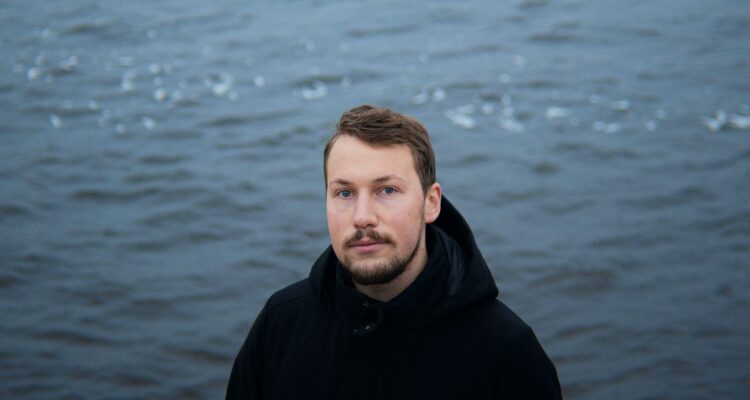
Mit seinem Debütfilm Away – Vom Finden des Glücks über einen über einen Jungen, der auf einer einsamen Insel landet und nun nach einem Weg nach Hause sucht, eroberte Gints Zilbalodis 2019 die Herzen von Animationsfans, auch weil er den Film komplett allein gemacht hatte. Umso neugieriger durfte man sein, wie sein zweiter Langfilm ausfallen würde. Im Frühjahr 2024 war es so weit und Flow (Kinostart: 6. März 2025) feierte Premiere. Anschließend war das Abenteuer um eine Gruppe von Tieren, die während einer Flut zusammenfinden, auf zahlreichen Festivals zu sehen und gewann reihenweise Filmpreise. Der Höhepunkt: die Auszeichnung mit dem Oscar als bester Animationsfilm des Jahres. Wir haben den lettischen Regisseur in Annecy getroffen und uns über die Arbeit an dem Film unterhalten und wie es für ihn war, diesmal mit anderen zu kooperieren.
Könntest du uns etwas über die Entwicklung des Films erzählen? Wie bist du auf die Idee zu Flow gekommen?
Flow ist mein zweiter Film. Mein erstes war Away, den ich selbst gemacht hatte. Und es war auch eine Geschichte über das Alleinsein. Der nächste Teil ist sozusagen eine Fortsetzung dieses Themas, denn die Figur, die Katze, ist zunächst sehr unabhängig und daran gewöhnt, allein zu sein. Und dann ist da noch diese Überschwemmung, die sie dazu zwingt, ein kleines Boot mit anderen Tieren zu teilen. Es ist also ein bisschen wie bei mir auf dieser Reise, zum ersten Mal einen Film im Team zu machen. Das Gleiche gilt für die Katze, die im Team arbeiten muss.
Als wir das Interview zu Away geführt haben, hast du bereits erwähnt, dass es im nächsten Film um Zusammenarbeit gehen wird. War es schon immer geplant, einen Film über Tiere zu machen? Denn man hätte auch einen Film über die Zusammenarbeit von Menschen machen können.
Es ging immer um Tiere, es gab zu keinem Zeitpunkt menschliche Charaktere. Ich hatte in meinen Filmen noch nie Dialoge und wollte eine Situation schaffen, in der es Sinn macht, dass niemand spricht. Bei Away handelte es sich nur um einen Charakter, daher macht es Sinn, dass er nicht redet. Und jetzt sind es nur noch Tiere. Das macht also auch Sinn. Meine Lieblingsfilme sind die eher visuell geprägten Filme. Filme mit starken Bildern, die die Kamera, die Musik und den Ton nutzen. Ich bin nicht wirklich an Dialogen interessiert. Vielleicht versuche ich es eines Tages, aber mich interessiert vor allem die Kamera und das visuelle Erzählen der Geschichte.
Könntest du uns Beispiele nennen? Was waren deine Inspirationen für Flow?
Ich versuche nicht, direkt auf andere Filme Bezug zu nehmen. Aber ich bin ein Fan von Filmemachern, die die Kamera nutzen, wie Alfonso Cuarón und Paul Thomas Anderson. Wir neigen dazu, die Kamera auf untypische Weise zu verwenden. Wir haben keine Storyboards verwendet. Das Ganze wurde einfach mit der 3D-Animatik erstellt, die ich auch selbst gemacht habe. Das bedeutet, dass ich die Umgebung erschaffe und sie dann mit der virtuellen Kamera erkunden und Aufnahmen machen kann. Und diese Art von Filmen kann man nur in 3D machen, weil sich die Kamera so stark bewegt. Auf 2D-Storyboards kann man diese Tiefe nicht wirklich erzeugen. Außerdem wollte ich, dass die Kamera irgendwie unvollkommen wirkt. Es gibt diese Handbewegung und manchmal ist der Fokus zunächst nicht perfekt. Auch die Charaktere sind nicht ganz realistisch. Man sieht nicht das ganze Fell, nicht jedes einzelne Fell der Tiere. Alles ist so gestaltet, dass es im Rahmen wirklich schön aussieht. Wir haben nur Details, wo es notwendig ist. Ich wollte, dass dies eine klare Reise ist, denn sonst könnte es sich anfühlen, als wären sie auf dem Wasser verloren. Aber das ist es nicht. Da ist dieses Abenteuergefühl, das wichtig ist. Und auch die Musik ist recht einfach. Die Melodien sind recht einfach, aber wir bauen die Bewegung durch die verschiedenen Arrangements und Orchestrierungen auf. Es gibt Schichten auf den oberen Schichten. Und ich mag solche einfachen Ideen, auf die wir tiefer eingehen können und die genug Zeit haben, um erfolgreich zu sein. Diesen Ansatz verwende ich für jeden Aspekt des Films.
Hast du die Musik wieder so gemacht wie in deinem ersten Film?
Ja, habe ich, aber diesmal hatte ich auch Hilfe von einem anderen Komponisten, der meine ursprünglichen Ideen aufgriff. Deshalb mache ich die Musik sehr früh, weil ich keine temporäre Musik verwenden möchte. Das bedeutet, dass manchmal Leute Musik aus anderen Filmen nehmen und dann den Komponisten bitten, diese zu kopieren. Ich glaube nicht, dass das ein guter Ansatz ist, deshalb wollte ich schon früh Musik machen. Also habe ich sie gemacht, bevor das Drehbuch fertig war. Und dann habe ich den Film zu meiner eigenen Musik hinzugefügt. Ich habe die Musik elektronisch auf meinem Computer gemacht. Aber ich wollte wieder mehr von diesen Unvollkommenheiten haben und diese menschliche Sensibilität haben. Also fragten wir den anderen Komponisten, Rihards Zaļupe, der die meisten Instrumente selbst spielte, und dann hatten wir dieses riesige Orchester. Für mich war es großartig zu hören, wie meine ersten Motive von einem Orchester gespielt wurden. Da ich die Musik so früh gemacht habe, habe ich nicht darüber nachgedacht, die Motive im Laufe des Films weiterzuentwickeln. Ich habe jedes Musikstück für eine bestimmte Szene gemacht. Aber Rihards sorgte dafür, dass sich die Motive weiterentwickeln. Und wir hören das Hundemotiv und das Katzenmotiv, wie sie sich abwechseln. Dabei sind sie Teil eines größeren Stücks, nicht nur kleinere Einzelstücke.
Du hast erwähnt, dass es das erste Mal ist, dass du mit so vielen Menschen zusammenarbeitest. Wie war es für dich, auf diese Weise zu expandieren?
Ich denke, dieses Projekt wäre alleine nicht zu bewältigen gewesen. Der Umfang ist viel größer, es gibt mehr Charaktere, es ist dichter. Dann haben wir komplizierte Effekte wie das Wasser, die ich selbst nicht machen konnte. Die Zusammenarbeit mit dem Team hat wirklich Spaß gemacht, ist aber auch mit viel Arbeit und Verantwortung verbunden. Es gab immer jemanden, der mich etwas fragte, und ich musste Wege finden, meine Ideen zu erklären. Das musste ich lernen, denn wenn ich vorher eine Idee hatte, konnte ich sie selbst umsetzen und musste sie nicht erklären. Aber jetzt muss alles einen Grund haben und ich muss mir ganz klar darüber im Klaren sein, was meine Absichten sind. Ich glaube, ich war gut vorbereitet und hatte einen Plan, aber gleichzeitig habe ich dem Team viel Input gegeben und eigene Ideen eingebracht, so dass sie sich beteiligt fühlten und es nicht nur ein Job für sie war. Ich wollte, dass sie das Gefühl haben, dass dies auch ihr Film ist, den sie machen. Wenn es also eine gute Idee ist, die der Animator vielleicht mitbringt, kann ich die Kamera so einstellen, dass sie mit dieser neuen Idee funktioniert. Es war eine Zusammenarbeit und es ist sehr bereichernd, wenn alle zusammenarbeiten und wir am gleichen Ziel arbeiten. Es gehört zur Aufgabe des Regisseurs, dafür zu sorgen, dass all diese verschiedenen Elemente zusammenwirken und nicht gegeneinander. Zum Beispiel der Ton und die Musik, es ist wichtig, dass es einige Szenen ohne Musik gibt, und der Ton spielt wirklich die Hauptrolle, um dieses Gefühl des Eintauchens zu erzeugen, dass es diese taktile Welt ist, in der man das Wasser berühren kann. Es gibt aber auch einige Szenen, in denen nur die Musik vorhanden ist und der Ton nicht stört. Deshalb war es für mich wichtig, all diese Dinge in Einklang zu bringen, und ich denke, wir haben es geschafft, eine gute Balance zu finden.
Dann lass uns über die Tiere reden. Warum hast du diese Tiere als deine Charaktere ausgewählt? Es hätte auch Millionen anderer Alternativen gegeben.
Nun, es begann mit der Katze, denn ich brauchte eine Figur, die Angst vor Wasser hat, und jeder weiß, dass Katzen Angst vor Wasser haben. Außerdem sind Katzen nicht sehr gesellig, ich schätze, sie machen, was sie wollen und sind sehr unabhängig, und deshalb macht es Sinn, diese Katze zu haben. Aber die anderen Tiere wurden aufgrund des Themas des Films ausgewählt, bei dem es sich um eine Art Gesellschaft handelt und darum, zu einer Gruppe zu gehören oder tatsächlich nicht dazuzugehören und unabhängig sein zu wollen. Der Hund möchte also jemandem folgen, möchte, dass ihm jemand sagt, was er tun soll, und auch den anderen Tieren. Sie wollen zu ihrer Gruppe gehören und kämpfen darum, ihren Platz in der Welt zu finden. Die Katze ist also die Hauptfigur, und die anderen fordern die Katze auf unterschiedliche Weise heraus. Aber ich wollte keine Bösewichte im Film haben, die einfach nur böse sind. Deshalb gibt es Streit mit den Charakteren, aber wir können verstehen, warum sie das tun. Sie alle versuchen das Richtige zu tun. Das, was sie für richtig halten. Mir war es wichtig, dass wir sie alle verstehen und mit allen Tieren etwas anfangen können.
Und warum hast du die Flut als Schauplatz gewählt? Denn man hätte ein Abenteuer in einer anderen Umgebung machen können, in der die Tiere kooperieren müssen.
Ja, wie ich bereits erwähnte, ich wollte keine Bösewichte, also ist die Flut einfach die Natur, die viele Konflikte erzeugt. Außerdem kann Wasser sehr ausdrucksstark sein. Ich wollte zeigen, wie gruselig es ist, wie riesig es ist. Aber es kann auch schön und ruhig sein. Meine Idee war, dass die Angst vor dem Wasser mit der Angst vor dem anderen verbunden ist. Wenn die Katze lernt, die anderen anzunehmen, sehen wir auch, dass das Wasser bunter und klarer wird. Da wir keine Dialoge haben, haben wir diese visuellen Metaphern verwendet, um diese Dinge auszudrücken.
Du hast erwähnt, dass dein Film nicht ganz realistisch ist, aber er ist realistischer als Away, wenn man sich die Tiere ansieht, wie sie dargestellt werden, wie sie sich bewegen und so weiter. Wie hast du dich auf all diese Tieranimationen vorbereitet? Wie hast du sie studiert?
Unsere Animatoren haben bei jedem einzelnen eine Menge Referenzmaterial angeschaut. Glücklicherweise kann man im Internet so ziemlich jede Situation finden und so viele Referenzen finden. Es war wichtig, das Verhalten der Tiere sehr natürlich zu halten, damit sie sich nicht zu sehr wie Menschen verhalten. Sie werden wirklich von ihren Instinkten getrieben. Ihre Urbedürfnisse sind sehr klar und verständlich. Da es keinen Dialog gibt, müssen wir die Dinge auf diese Weise einfach halten. Und indem wir die Dinge einfach halten, können wir tiefer in sie eintauchen, denn jeder Charakter muss sehr unterschiedlich sein, damit er hervorsticht und sehr einzigartig ist.
Der Film handelt von Tieren, aber es ist natürlich ein Film für Menschen. Was erhoffst du dir von deinem menschlichen Publikum, nachdem es den Film gesehen hat?
Ich möchte das Ende nicht verraten, aber da ist keine einfache Antwort, denn es gibt einige Ängste, die man nicht einfach verschwinden lassen kann. Es gibt einige Dinge, die man nicht reparieren kann. Man muss stattdessen herausfinden, wie man mit diesen Ängsten, Befürchtungen und Unvollkommenheiten, die wir haben, leben kann. Es ist in gewisser Weise das, was uns zu dem macht, was wir sind, und wir müssen lernen, andere und auch uns selbst zu akzeptieren und mit dem Strom zu schwimmen und nicht zu versuchen, Dinge zu ändern und Dinge irgendwie zu akzeptieren.
Vielen Dank für das Interview!
With his debut film Away about a boy who ends up on a deserted island and is now looking for a way home, Gints Zilbalodis conquered the hearts of animation fans in 2019, also because he made the film completely alone. This made it all the more exciting to see what his second feature film would turn out to be. In spring 2024 the time had come and Flow had its premiere. The adventure about a group of animals who come together during a flood was subsequently shown at numerous festivals and won a number of film awards. The highlight: winning the Oscar for best animated film of the year. We met the Latvian director in Annecy and talked about working on the film and what it was like for him to collaborate with others this time.
Could you tell us a bit about the development of the film? How did you come up with the idea for Flow?
So it’s my second feature. My first one was Away which I made by myself. And it was also a story about being alone. The next one is kind of a continuation of this theme because the character, the cat is at first very independent and used to being alone. And then there’s this flood which forces him to share a small boat with other animals. So it’s kind of like me on this journey of making a film for the first time in a team. Same with the cat who has to work in a team.
When we did the interview on Away you already mentioned that the next film would be about cooperation. Was it always planned to do a film about animals? Because you could have done a film about people cooperating as well.
It was always about animals. And there was never at any point human characters. I’ve never had any dialogues in my films and I wanted to create a situation where it makes sense that nobody is talking. With Away ist was just one character, so it makes sense that he doesn’t talk. And now it’s just animals. So that makes sense too. My favorite films are the more visually driven films. Films with strong visuals that use the camera, that use the music and the sound. I’m not really that interested in dialogue. I might try it someday, but I’m mostly interested in the camera and in telling the story visually.
Could you give us any examples? What was your inspiration for Flow?
Yeah, I don’t like directly try to reference other films. But I’m a fan of filmmakers who use the camera like Alfonso Cuarón and Paul Thomas Anderson. We tend to use the camera in ways that are not typical. We didn’t use any storyboards. It was all just made using the 3D animatic, which I did myself too. That means that I create the environment and then I can use the virtual camera to explore them and find shots. And you can only do this type of film in 3D because the camera is moving so much. You can’t really draw this kind of depth on 2D storyboards. Also I wanted the camera to feel kind of imperfect in ways. There’s this handheld movement and sometimes the focus is not perfect at first. The characters are not totally realistic either. You don’t see all the fur, every single fur on the animals. Everything is designed to look really nice in the frame. We only have details where it’s necessary. I wanted this to be a clear journey because otherwise it might feel like they’re lost at sea. But it’s not that. There’s this more adventure feeling which is important. And also the music is quite simple. The melodies are quite simple, but we build the motion through the different arrangements and orchestration. There are layers on top pf layers. And I like these kind of simple ideas that we can go deeper into, that have enough time to do well. It’s this approach I use for every aspect of the film.
You did the music again like in your first film?
I did, but I also had help this time from another composer who took my initial ideas. I made the music really early because I don’t want to use temp music. Which means that sometimes people take music from other films and then ask the composer to make a copy. I don’t think it’s a good approach, so I wanted to have music early. So I made it before the script was finished. And then I added the film to my own music. I made the music electronically on my computer. But I wanted to have more like, again, these imperfections and have this human sensibility. So we asked the other composer, Rihards Zaļupe, who played most of the instruments himself, and then we had this huge orchestra. It was amazing for me to hear my initial themes be played by an orchestra. Because I made the music so early, I wasn’t thinking about developing the themes throughout the film. I made each piece of music for a specific scene. But Rihards made sure that the themes are developing. And we hear the dog theme and the cat theme, and they’re kind of interval, and it’s more part of a bigger piece, not just smaller individual pieces.
You mentioned that it’s the first time that you’re cooperating with so many people. How was it like for you to expand in that way?
I think this project just couldn’t be done by myself. It’s much bigger in scope, it has more characters, it’s more dense. Then we have complicated effects like the water, which I couldn’t do myself. It was really fun to work with the team, but it’s also a lot of work and responsibility. There was always someone asking me something, and I needed to find ways how to explain my ideas. I had to learn that, because before when I had an idea I could do it myself, and I didn’t need to explain it. But now everything needs to have a reason, and I need to be very clear what my intentions are. I think I was quite prepared and had a plan, but at the same time I allowed the team to have a lot of input and come up with their own ideas so that they feel invested and it wasn’t just a job for them. I wanted them to feel that this is also their film that they’re making. So if it’s a good idea, the animator may bring, I can adjust the camera so it works with this new idea. It was a collaboration, and it’s very rewarding when it all works together, and we’re working on the same goal. It’s part of the job of the director to make sure that all these different elements work together and not against each other. For example, the sound and the music, it’s important that there are some scenes without any music, and the sound has really the main role, to create this sense of immersion, that it’s this tactile world where you can touch the water. But also there are some scenes with just the music, and the sound is not interfering. So it was important for me to balance all these things, and I think we managed to find a good balance.
Then let’s talk about the animals. Why did you choose these animals as your characters? There would have been millions of other choices too.
Well, it started with the cat, because I needed a character who’s afraid of water, and everyone knows that cats are afraid of water. Also cats are not very sociable, I guess they do what they want and are very independent, and so it makes sense to have this cat. But the other animals were chosen based on the theme of the film, which is kind of the society, and wanting to belong in a group, or actually not wanting to belong, and wanting to be independent. So the dog wants to follow someone, wants someone to tell them what to do, and the other animals as well. They want to belong with their group, and they struggle to find their place in the world. So the cat is the main character, and the other are kind of challenging the cat in different ways. But I didn’t want to have any villains in the film that are just purely evil. That’s why there are arguments with the characters, but we can understand why they’re doing this. They’re all trying to do what’s right, what they think is right. It was important to me that we can understand all of them and that we can relate with all the animals.
And why did you choose the flood as a setting? Because you could have done an adventure in a different setting where the animals have to cooperate.
Yeah, as I mentioned, I didn’t want the villains, so the flood is just the nature that creates a lot of conflict. Plus water can be very expressive. I wanted to show how scary it is, how huge it is. But it can also be beautiful, and serene. My idea was that the fear of the water is linked to the fear of the other. So as the cat learns to embrace the others, we also see that the water is more colorful and more clear. Since we don’t have dialogues we used these visual metaphors to express these things.
You mentioned that your film isn’t totally realistic, but it’s more realistic than Away was when you look at the animals, how they are portrayed, how they move and so on. How did you prepare to do all these animal animations? How did you study them?
Our animators took a lot of references for every single one. Luckily on the internet you can find pretty much every situation and have so many references. It was important to keep the behavior of the animals very grounded, that they’re not behaving too much like humans. They’re really driven by their instincts. Their primal needs are very clear and understandable. Since there’s no dialogue we need to keep things simple that way. And by keeping things simple we can kind of delve deeper into them because we need each character to be very different, so that they stand out and are very unique.
The film is about animals, but it’s of course a film for humans. What do you hope that your human audience takes with it, after seeing the film?
I don’t want to spoil the ending, but it’s not a simple answer, because there are some fears you can’t just make go away. There are some things you can’t fix, but you have to figure out how to live with these anxieties and fears and imperfections that we have. It’s kind of what makes us who we are, and we have to learn how to accept others and how to accept ourselves as well and how to go with the flow and not try and change things and kind of accept things.
Thank you for the interview!
(Anzeige)